 Call Us : 07313726879Call Us : 07313726879
 Send Inquiry
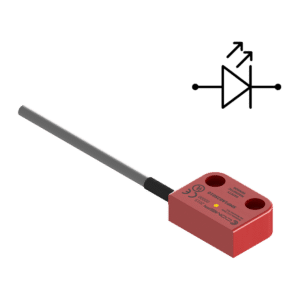
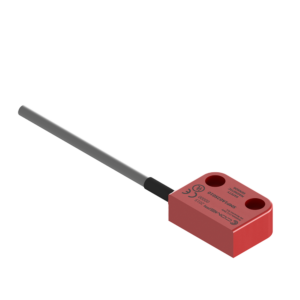
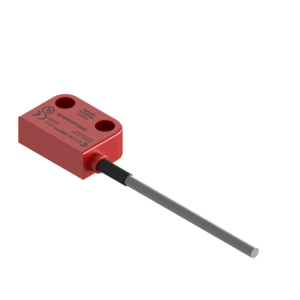
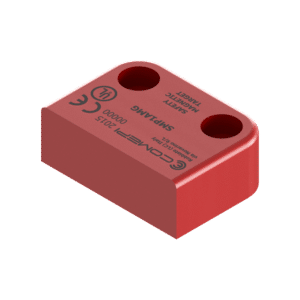
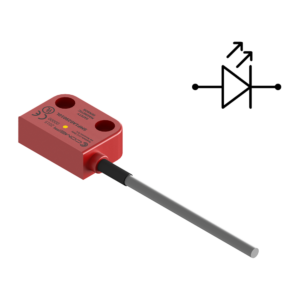
SMP1A - Connection with cable Safety magnetic sensors Connection with cable
Price 2800 INR/ Piece
MOQ : 10 Pieces
SMP1A - Connection with cable Safety magnetic sensors Connection with cable Specification
- Automation Grade
- Industrial Grade
- Max. Current
- 200 mA
- Rated Voltage
- 24 VDC / 230 VAC
- Number of Module
- Single sensor module
- Temperature Range
- -25C to +70C
- Circuit Type
- NO (Normally Open)
- Protection Level
- IP67
- Response Time
- 1 ms
- Finish Type
- Matte
- Mechanical Life
- Over 1,000,000 operations
- Product Type
- Safety Magnetic Sensor (SMP1A)
- Material
- ABS Plastic, Encapsulated epoxy resin
- Insulation Resistance
- 100 M (at 500 VDC)
- Contact Resistance
- 100 m
- Max. Voltage
- 100 VDC / 250 VAC
- Operating Temperature
- -25C to +70C
- Stoke
- 3 mm (operating distance)
- Size
- 60 mm x 13 mm x 13 mm (approx.)
- Color
- Red Body
- Weight
- Approx. 60 g (including cable)
- Mounting Type
- Surface Mount
- Current Rating
- 200 mA max.
- No Of Poles
- 2 wires (normally open)
- Cable Length
- 2 m (PVC insulated, standard)
- Output Type
- Reed contact
- Actuator Type
- Magnet operated
- Switching Distance
- Max. 8 mm (between actuator and sensor)
SMP1A - Connection with cable Safety magnetic sensors Connection with cable Trade Information
- Minimum Order Quantity
- 10 Pieces
- Supply Ability
- 100 Pieces Per Month
- Delivery Time
- 8 Week
- Sample Policy
- If order is confirmed we will reimburse the sample cost
- Main Export Market(s)
- Middle East, Asia
- Main Domestic Market
- All India
- Certifications
- CE & UL Certified
About SMP1A - Connection with cable Safety magnetic sensors Connection with cable
Safety magnetic sensors
Safety magnetic sensors by Comepi represent the best solution in safety gates control for every application, mainly in environment with strong presence of dust and dirtiness. Available in two different sizes, with cable or connector and equipped with three different contacts configurations. The use of our safety magnetic sensors is particularly indicated for use with safety modules MSA31 series, in order to reach safety performances up to SIL3 and PLe.
Reliable Industrial Safety Sensing
Designed for demanding environments, the SMP1A cable safety magnetic sensor guarantees accident prevention through precise, contactless detection. Its encapsulated epoxy resin and ABS body refine durability, making it suitable for various challenging industrial settings. The IP67 sealing and reinforced cable provide protection against dust, moisture, and external impacts.
Effortless Installation and Maintenance
Installation is straightforward with the sensor's surface mount design and compact dimensions. The flexible 2 m cable allows easy connection to control systems. Maintenance is simplified by the robust build, long mechanical life, and matte finish, supporting frequent use without degradation. Regular inspections ensure optimal operation across temperature ranges.
Versatile Applications and Performance
This sensor module integrates seamlessly into automation systems where safety is paramount, such as conveyors, doors, or machinery guards. It is capable of handling various voltages and offers fast response times for immediate safety feedback. With wide distributor availability in Italy and globally, procurement and integration are hassle-free.
FAQ's of SMP1A - Connection with cable Safety magnetic sensors AAA Connection with cable:
Q: How do I install the SMP1A cable safety magnetic sensor for optimal performance?
A: Mount the SMP1A on a flat surface near the moving machinery, ensuring the actuator's magnet aligns within the specified 8 mm switching distance from the sensor. Use the provided 2-meter PVC-insulated cable for electrical connection and secure the body using the mounting holes. Maintain the temperature range between -25C and +70C for reliability.Q: What makes the SMP1A suitable for industrial automation applications?
A: Its IP67 protection rating, robust ABS construction, encapsulated epoxy resin, and capacity to withstand over 1,000,000 operations make the SMP1A highly suited for industrial settings. It provides quick response (1 ms), high insulation resistance, and dependable NO reed contact switching for effective process safety.Q: When should the SMP1A sensor be used in machinery or automation setups?
A: Deploy the SMP1A whenever safety interlocking or monitoring of doors, guards, or moving parts is essential. Use it in environments requiring prompt and reliable feedback for operator protection, typically during maintenance, operation, or access control periods.Q: Where can I purchase the SMP1A sensor module?
A: The SMP1A sensor module is available through distributors, exporters, importers, suppliers, and traders in Italy and internationally. Contact your local automation equipment provider or authorized distributor for ordering and product support.Q: What is the process for connecting the SMP1A sensor to an electrical control system?
A: Connect the sensor's two wires (normally open circuit) directly to your safety relay or controller input. Ensure the rated voltage (24 VDC or 230 VAC) and max current (200 mA) specifications are respected. Double-check insulation resistance and contact resistance for system compliance during installation.Q: How is the sensor used in everyday operation, and what are its main benefits?
A: The SMP1A is used in safety interlocking, monitoring, and automation processes where magnetic actuation provides contactless system feedback. Its benefits include rapid response, high durability, simple surface mount installation, resistance to environmental stress, and compatibility with a variety of industrial voltages.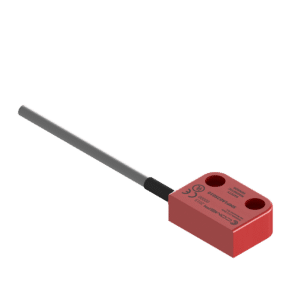
Tell us about your requirement

Price:
Quantity
Select Unit
- 50
- 100
- 200
- 250
- 500
- 1000+
Additional detail
Mobile number
Email

More Products in Non contact Magnetic coded safety switches Category
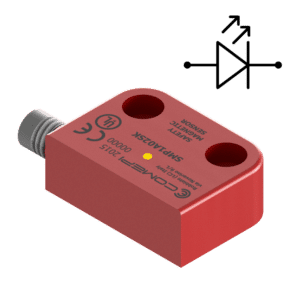
SMP1AK - M8 connector Safety magnetic sensors Connection with M8 connector
Price 3000 INR / Piece
Minimum Order Quantity : 10 Pieces
Protection Level : IP67
Max. Voltage : 250V AC/DC
No Of Poles : 1 NO/1 NC (configurable)
Mounting Type : Surface Mount
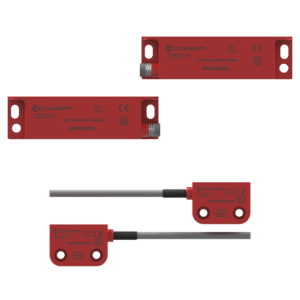
Safety magnetic sensors
Price 2500 INR / Piece
Minimum Order Quantity : 10 Pieces
Protection Level : IP67
Max. Voltage : DC 30V / AC 110V
No Of Poles : 2
Mounting Type : Panel/Surface Mount
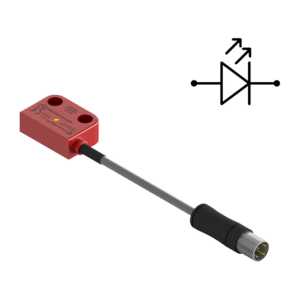
SMP1A001M - M12 connector + Cable Safety magnetic sensors Connection with M12 connector and cable (10cm)
Price 3000 INR / Piece
Minimum Order Quantity : 10 Pieces
Protection Level : IP67
Max. Voltage : 100 V AC/DC
No Of Poles : 4 Poles (M12, 4pin Connector)
Mounting Type : Surface Mount
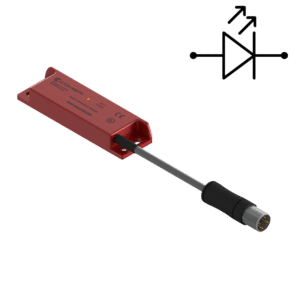
SMP2A001M - M12 connector + cable Safety magnetic sensors Connection with M12 connector and cable (10cm)
Price 3000 INR / Piece
Minimum Order Quantity : 10 Pieces
Protection Level : IP67
Max. Voltage : 100 VDC
No Of Poles : 2
Mounting Type : Panel/Surface Mount

Address
ISAC ENTERPRISES
GST : 27AYNPM0695C1Z8
GST : 27AYNPM0695C1Z8
- Unit No.404, Ace Aurum Commercial, Opposite Santosa Resort, Off Mumbai Bangalore Road, Ravet,Pune - 412101, Maharashtra, India
- Phone :07313726879
- Send Inquiry
 Send Inquiry
 Send Inquiry
 Send SMS
 |
ISAC ENTERPRISES
All Rights Reserved.(Terms of Use) Developed and Managed by Infocom Network Private Limited. |
