 Call Us : 07313726879Call Us : 07313726879
 Send Inquiry
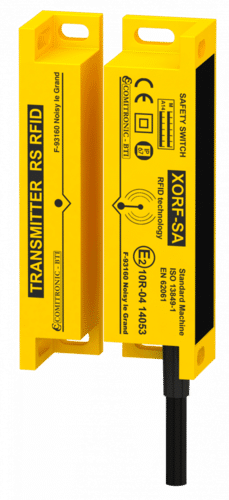
XORF-SA - Non-autonomous safety switch with RFID coding
Price 6500-10000 INR/ Piece
MOQ : 10 Pieces
XORF-SA - Non-autonomous safety switch with RFID coding Specification
- Circuit Type
- RFID coded safety circuit
- Rated Voltage
- 24V AC/DC
- Mechanical Life
- > 1,000,000 cycles
- Finish Type
- Matte finish
- Protection Level
- IP67
- Max. Current
- 2A AC or DC
- Response Time
- < 50 ms
- Temperature Range
- -25C to +70C
- Number of Module
- Single module
- Automation Grade
- Automatic
- Product Type
- Non-autonomous safety switch with RFID coding
- Material
- High-strength thermoplastic housing
- Insulation Resistance
- > 100 M at 500V DC
- Contact Resistance
- < 50 m
- Max. Voltage
- 250V AC/DC
- Operating Temperature
- -25C to +70C
- Stoke
- Short stroke actuator
- Size
- 88 x 25 x 13 mm
- Color
- Red & Black
- Weight
- Approx. 35g
- Mounting Type
- Surface/self-tapping screws
- Current Rating
- 2A
- No Of Poles
- 2 NC
- Max. Approach Speed
- 20 m/min
- Actuator Type
- Separate coded RFID actuator
- Switching Frequency
- 1Hz max
- LED Status Indication
- Yes (diagnostic display)
- Enclosure Material
- High-grade polyamide (PA6)
- Safety Category
- PLe (EN ISO 13849-1), SIL 3 (IEC 61508)
- Vibration Resistance
- 10-55Hz, amplitude 1mm
- Operating Voltage Range
- DC 24V 10%
- RFID Coding Type
- Unique, individually coded actuator
- Shock Resistance
- 30g, 11ms
- Ambient Humidity
- 5% to 85% (non-condensing)
- Connection Type
- Cable or M12 connector
- Standards Compliance
- EN ISO 14119, EN 60947-5-3
XORF-SA - Non-autonomous safety switch with RFID coding Trade Information
- Minimum Order Quantity
- 10 Pieces
- Supply Ability
- 100 Pieces Per Month
- Delivery Time
- 8 Week
- Sample Policy
- If order is confirmed we will reimburse the sample cost
- Main Export Market(s)
- Middle East, Asia
- Main Domestic Market
- All India
- Certifications
- CE certified
About XORF-SA - Non-autonomous safety switch with RFID coding
XORF-SA - NON-AUTONOMOUS SAFETY SWITCH WITH RFID CODING
Controls the position of security doors with RFID encoding for wheeled vehicles
RFID sensor with 16 million codes
Suitable for metallic environments
Programmable code through auto-learning (no software or PC)
Level of performance with AWAX controller: up to PL = e
Safety category: up to 4 (EN 954-1) with AWAX controller
Time to dangerous failure: MTTFd = 40 years
Max activation distance: up to 24 mm
Security contact/diagnostics: 2 x redundant NO 50mA/30V and
1 x 50mA auxiliary PNP
Detection encoding: inviolable multicode
Indicator: LED indicates code recognition
Reset: automatic
Attachment: 4 tamper-proof M4 screws (in base option: BH4)
Mounting position: 2 (double wall brackets)
Material: PA6
Electrical Connection: 50cm PUR cable with M12 connector
Sealing: IP 68
Standing room temperature: -30 C to +50 C.
Storage temperature: -40 C to +85 C
Marking: pad printing + serial number for traceability
Certificate: E2 10R-04 14053 (UTAC)
ISO 7637-2 (Pulse 1, 2a, 2b, 3a, 3b, 4)
Uncompromising Safety Compliance
Certified for use up to PLe and SIL 3 categories, the XORF-SA guarantees reliable operation in safety-critical applications. Its RFID-coded safety circuit, coupled with a unique actuator, ensures tamper-resistant protection, meeting EN ISO 14119 and EN 60947-5-3 standards. Ideal for demanding automated systems in industries such as manufacturing and assembly.
Versatile Connectivity and Installation
With options for cable or M12 connector, as well as surface mounting using self-tapping screws, the XORF-SA fits easily into new or existing safety frameworks. The high-strength thermoplastic housing (PA6) is both lightweight and resilient, suitable for harsh environments with wide ambient temperature and humidity variations.
Efficient Operation and Diagnostics
This switch supports frequent actuationup to 1Hzwhile providing immediate feedback via LED status indicators. Its short stroke actuator ensures rapid response times under 50 milliseconds. The mechanical lifetime exceeds 1,000,000 cycles, ensuring extended service and reduced maintenance in automated processes.
FAQs of XORF-SA - Non-autonomous safety switch with RFID coding:
Q: How does the XORF-SA safety switch enhance machine safety?
A: The XORF-SA utilizes unique RFID actuator coding to prevent bypassing or tampering, ensuring only specifically paired actuators trigger the safety circuit. Its compliance with PLe and SIL 3 certifications provides high-level protection in hazardous environments.Q: What is the installation process for this RFID safety switch?
A: The XORF-SA can be mounted using surface or self-tapping screws. It connects via a cable or an M12 connector, simplifying integration into existing safety control systems. Its compact size allows for easy placement, even in space-constrained applications.Q: When should I use a non-autonomous, uniquely coded RFID safety switch?
A: Deploy this switch when your application demands maximum safety integrity, anti-bypass capabilities, and traceability. It is ideal for machines requiring EN ISO 14119-compliant access protection and situations where standard mechanical switches may be easily defeated.Q: Where can this safety switch be deployed effectively?
A: The XORF-SA is suitable for a wide range of automated machinery in factories, assembly lines, and other industrial environments. Its robust IP67-rated polyamide enclosure ensures reliable performance even in dusty or moist conditions.Q: What are the primary benefits of the XORF-SA for manufacturers and system integrators?
A: It offers high safety reliability, quick diagnostics with LED status display, long service life, and flexible mounting and connection. This reduces downtime, boosts system integrity, and streamlines maintenance in automated safety applications.Q: How do the LED diagnostic indicators support system maintenance?
A: The built-in LED status display provides real-time feedback on switch operation and faults, enabling rapid troubleshooting and minimizing production interruptions.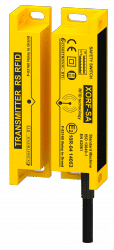
Tell us about your requirement

Price:
Quantity
Select Unit
- 50
- 100
- 200
- 250
- 500
- 1000+
Additional detail
Mobile number
Email

More Products in Non Contact RFID Coded Safety Switches Category
XORF-SA2 - RFID SAFETY SWITCH FOR ROLLING STOCK, ON-BOARD EQUIPMENT
Price 12000 INR / Piece
Minimum Order Quantity : 10 Pieces
Size : 83 mm x 25 mm x 13 mm (Sensor)
Stoke : Noncontact RFID activation
Max. Voltage : 250 VDC/AC
Contact Resistance : 100 m

Address
ISAC ENTERPRISES
GST : 27AYNPM0695C1Z8
GST : 27AYNPM0695C1Z8
- Unit No.404, Ace Aurum Commercial, Opposite Santosa Resort, Off Mumbai Bangalore Road, Ravet,Pune - 412101, Maharashtra, India
- Phone :07313726879
- Send Inquiry
 Send Inquiry
 Send Inquiry
 Send SMS
 |
ISAC ENTERPRISES
All Rights Reserved.(Terms of Use) Developed and Managed by Infocom Network Private Limited. |
