 Call Us : 07313726879Call Us : 07313726879
 Send Inquiry
Limit switches for over-speed devices
Price 800-1200 INR/ Piece
MOQ : 20 Pieces
Limit switches for over-speed devices Specification
- Automation Grade
- Automatic
- Max. Current
- 10A
- Protection Level
- IP67
- Mechanical Life
- 10,000,000 operations
- Number of Module
- Single
- Temperature Range
- -25C to +70C
- Circuit Type
- SPDT
- Response Time
- 5 ms
- Finish Type
- Powder Coated
- Rated Voltage
- 240V AC/24V DC
- Product Type
- Limit Switch for Over-Speed Device
- Material
- High Strength Metal Alloy with Polycarbonate Housing
- Insulation Resistance
- 100 M (at 500V DC)
- Contact Resistance
- 50 m
- Max. Voltage
- 500V AC/DC
- Operating Temperature
- -25C to +70C
- Stoke
- 15 mm
- Size
- 86 mm x 40 mm x 38 mm
- Color
- Black & Silver
- Weight
- 210 g (approx)
- Mounting Type
- Panel/Surface Mount
- Current Rating
- 10A @ 250V AC
- No Of Poles
- 1
- Dielectric Strength
- 2000V AC for 1 min between terminals
- Contact Type
- Silver Plated Contacts
- Vibration Resistance
- 10-55 Hz, amplitude 1.5 mm
- Contact Arrangement
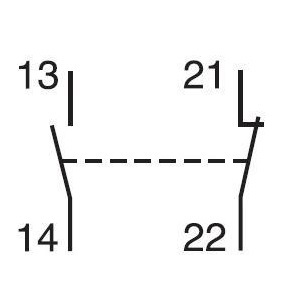
- 1 NO + 1 NC
- Ingress Protection
- IP67 certified against dust and water
- Shock Resistance
- Mechanical 1000 m/s², Electrical 200 m/s²
- Storage Temperature
- -40°C to +85°C
- Installation
- Screw terminal, horizontal alignment
- Actuator Type
- Plunger
- Switching Frequency
- 120 operations/minute
Limit switches for over-speed devices Trade Information
- Minimum Order Quantity
- 20 Pieces
- Supply Ability
- 100 Pieces Per Month
- Delivery Time
- 6 Week
- Sample Available
- Yes
- Sample Policy
- Free samples are available
- Main Export Market(s)
- Asia
- Main Domestic Market
- All India
- Certifications
- CE
About Limit switches for over-speed devices
Limit switches for over-speed devices
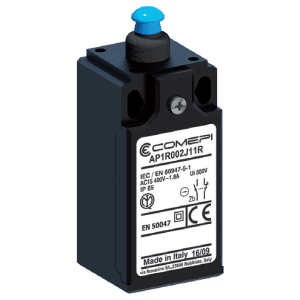
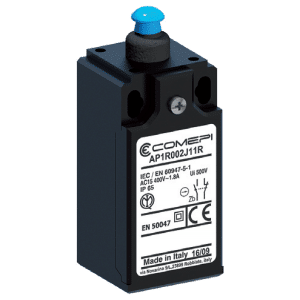
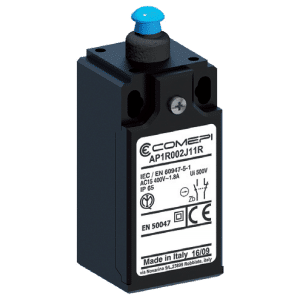
Switches specifically designed for applications on over-speed devices. By actuating the plunger until the operation position P1, the electrical contacts switch and simultaneously the plunger reaches automatically P2 position. The device is restored by pulling the blue plunger until P0 free position.
Exceptional Environmental Protection
Built with IP67 ingress protection, this limit switch is perfectly suited for harsh industrial settings. Its sealed structure ensures reliable operation in environments with heavy dust and intermittent water exposure, maintaining performance and longevity.
Precision Performance and Safety
Offering dielectric strength of 2000V AC, swift response times under 5 milliseconds, and a mechanical life of 10 million cycles, this device delivers consistent and accurate protection against over-speed conditions in automated machinery.
Robust Construction and Easy Installation
Designed with a high-strength alloy and polycarbonate housing, the switch is both durable and lightweight. Installation is straightforward with screw terminals and horizontal alignment, suitable for panel and surface mounting in diverse industrial layouts.
FAQ's of Limit switches for over-speed devices:
Q: How can I install the limit switch for over-speed applications?
A: Installation is simplified via screw terminal connections and horizontal alignment. It's suitable for panel or surface mounting, with clear dimensions of 86 mm x 40 mm x 38 mm. The process involves securing the switch, connecting wires as per the terminal diagram, and ensuring the actuator is properly aligned with the moving part.Q: What are the benefits of IP67 certification for this switch?
A: IP67 ingress protection ensures the device is fully dust-tight and can withstand immersion in up to one meter of water for 30 minutes. This is particularly beneficial in industrial environments with frequent dust and splashing, guaranteeing long-term reliability.Q: When should I use this over-speed limit switch in my automation system?
A: This switch is ideal for installations requiring high-frequency actuation, precise over-speed monitoring, and robust environmental resistance. Typical use cases include conveyor systems, industrial machinery, and safety interlocks where over-speed can pose risks.Q: Where is this limit switch commonly utilized?
A: Due to its durable construction and advanced protective ratings, the switch finds application in factories, processing plants, and automation setups. It's supplied, exported, and distributed globally, including Italy, through established suppliers and traders.Q: What is the process for wiring the limit switch?
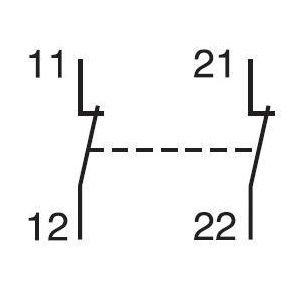
A: Wiring involves connecting to screw terminals with silver-plated contacts arranged in a single-pole double-throw (SPDT) configuration-1 NO and 1 NC-using standard panel-mounting procedures to integrate into control circuits for automatic response to over-speed conditions.Q: How does the actuator type and switching frequency affect its usage?
A: The plunger actuator provides accurate position sensing with a stroke of 15 mm and supports 120 operations per minute. This makes the switch highly effective for continuous operation and rapid cycling in automated systems.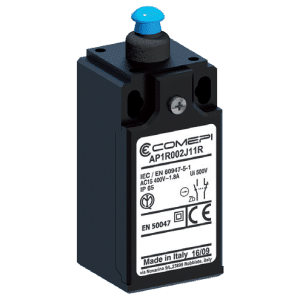
Tell us about your requirement

Price:
Quantity
Select Unit
- 50
- 100
- 200
- 250
- 500
- 1000+
Additional detail
Mobile number
Email

More Products in Limit Switches for Special Applications Category
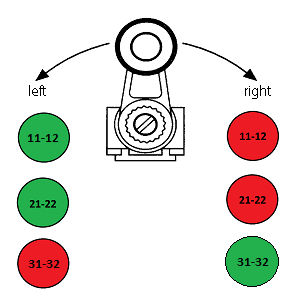
Limit switches with directional signals
Price 1200-2000 INR / Piece
Minimum Order Quantity : 10 Pieces
Max. Current : 10A
Automation Grade : Automatic
Stoke : 10 mm (typical)
Size : 62 mm x 30 mm x 28 mm
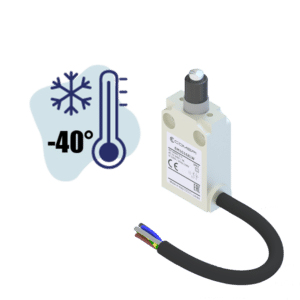
Limit switches for low temperature
Price 1800-2200 INR / Piece
Minimum Order Quantity : 10 Pieces
Max. Current : 5A
Automation Grade : Automatic
Stoke : 20 mm
Size : Standard Compact
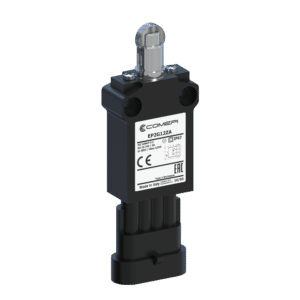
Automotive Applications Limit Switches
Price 2000-2500 INR / Piece
Minimum Order Quantity : 10 Pieces
Max. Current : 10A
Automation Grade : Automatic
Stoke : 12 mm
Size : Standard Compact
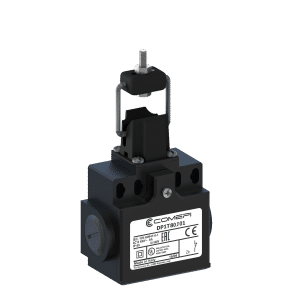
limit switches for lift applications
Price 1000-1500 INR / Piece
Minimum Order Quantity : 20 Pieces
Max. Current : 10A
Automation Grade : Automatic
Stoke : 10 mm
Size : 130 mm 40 mm 40 mm

Address
ISAC ENTERPRISES
GST : 27AYNPM0695C1Z8
GST : 27AYNPM0695C1Z8
- Unit No.404, Ace Aurum Commercial, Opposite Santosa Resort, Off Mumbai Bangalore Road, Ravet,Pune - 412101, Maharashtra, India
- Phone :07313726879
- Send Inquiry
 Send Inquiry
 Send Inquiry
 Send SMS
 |
ISAC ENTERPRISES
All Rights Reserved.(Terms of Use) Developed and Managed by Infocom Network Private Limited. |
