 Call Us : 07313726879Call Us : 07313726879
 Send Inquiry
Limit switches with directional signals
Price 1200-2000 INR/ Piece
MOQ : 10 Pieces
Limit switches with directional signals Specification
- Number of Module
- Single
- Max. Current
- 10A
- Finish Type
- Powder-coated
- Automation Grade
- Automatic
- Rated Voltage
- 250V
- Circuit Type
- SPDT (Single Pole Double Throw)
- Temperature Range
- -10C to +80C
- Protection Level
- IP65
- Response Time
- 20 ms
- Mechanical Life
- Over 1,000,000 operations
- Product Type
- Limit switches with directional signals
- Material
- Die-cast aluminum housing, thermoplastic actuator
- Insulation Resistance
- 100 M minimum (at 500V DC)
- Contact Resistance
- 25 m maximum (initial)
- Max. Voltage
- 250V AC/DC
- Operating Temperature
- -10C to +80C
- Stoke
- 10 mm (typical)
- Size
- 62 mm x 30 mm x 28 mm
- Color
- Grey body with red/black actuator
- Weight
- Approx. 120 g
- Mounting Type
- Panel mount with screws
- Current Rating
- 10A @ 250V AC
- No Of Poles
- 1
- Actuator Type
- Rotary lever roller type
- Shock Resistance
- 1000 m/s2
- Electrical Life
- Over 500,000 operations
- Ambient Humidity
- Up to 95% RH non-condensing
- Contact Configuration
- 1NO+1NC
- Service Condition
- Indoor/Outdoor
- Switch Operation Type
- Snap Action
- Standards Compliance
- IEC 60947-5-1
- Conductor Connection
- Screw terminals
- Direction Indicator
- Multi-directional signal output
- Vibration Resistance
- 10-55 Hz, 1.5mm double amplitude
Limit switches with directional signals Trade Information
- Minimum Order Quantity
- 10 Pieces
- Supply Ability
- 100 Pieces Per Month
- Delivery Time
- 6 Week
- Sample Available
- Yes
- Sample Policy
- Within a certain price range free samples are available
- Main Export Market(s)
- Asia
- Main Domestic Market
- All India
- Certifications
- CE
About Limit switches with directional signals
Limit switches with directional signals
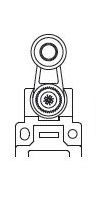
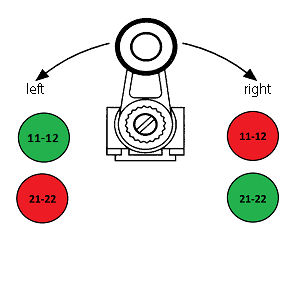
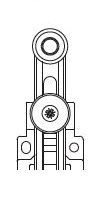
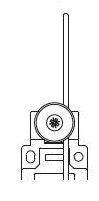
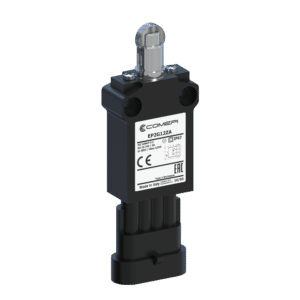
Limit switches with contact blocks J series, able to generate a different signal with an actuation from the left side or from the right side.
Robust Design for Demanding Environments
Engineered with a die-cast aluminum body and thermoplastic actuator, this limit switch ensures resilience in tough conditions. Its IP65 rating guards against dust and water, while the powder-coated finish provides an added layer of protection. Suitable for both indoor and outdoor applications, the unit excels in environments where reliability and longevity are paramount.
Efficient Multi-Directional Signal Output
Thanks to its rotary lever roller and multi-directional signaling, this limit switch is perfect for automation systems needing versatile actuation from different angles. The snap action mechanism ensures rapid response (20 ms), while the 1NO+1NC contact configuration allows integration into complex control architectures for precise feedback and control.
Standards-Compliant and Easy to Install
Certified to IEC 60947-5-1, this switch meets strict international standards. The screw terminal connection type simplifies wiring, and the panel-mount design ensures secure and straightforward installation. Its compact size (62 x 30 x 28 mm) and moderate weight (approx. 120 g) make it adaptable to various panel layouts.
FAQs of Limit switches with directional signals:
Q: How does the multi-directional signal output benefit automation systems?
A: The multi-directional signal output allows this limit switch to detect actuation from several angles, increasing versatility when used in automated systems. Its ideal for applications where movement or process direction may vary, ensuring consistent and reliable signaling regardless of the actuators travel path.Q: What environments are suitable for installing this limit switch?
A: This switch is designed for both indoor and outdoor service thanks to its IP65 protection level, powder-coated die-cast aluminum housing, and ability to operate between -10C and +80C with up to 95% RH non-condensing humidity. It is suitable for industrial sites, automation panels, and environments exposed to dust and water spray.Q: When should snap action switches be used in control systems?
A: Snap action switches are preferred in control systems that require rapid and discrete switching with a clear distinction between on and off states. The fast response time (20 ms) and robust mechanical endurance make them particularly useful where precise, reliable status feedback is needed.Q: Where do I connect the wiring for this limit switch?
A: This limit switch features screw terminals for electrical connections. The terminals are clearly marked for easy identification, and the SPDT (1NO+1NC) configuration supports integration in numerous circuit types. Panel mounting is supported for secure and convenient installation in control enclosures.Q: What is the operational process of the rotary lever roller actuator?
A: The rotary lever roller actuator responds to physical contact or movement, rotating as an object triggers it. This mechanical motion is instantly translated into an electrical signal via the snap-action mechanism, activating or deactivating the switch contacts for accurate signaling.Q: How does compliance with IEC 60947-5-1 ensure safety and quality?
A: IEC 60947-5-1 certification assures that the limit switch meets rigorous international standards for performance, electrical safety, and reliability, offering peace of mind to installers and end-users about long-term dependability in automated control systems.Q: What are the main benefits of using a limit switch with 1NO+1NC contact configuration?
A: A 1NO+1NC (Single Pole Double Throw) contact configuration allows for both normally open and normally closed circuit integration. This enhances circuit design flexibility, supporting simultaneous signaling and control functions to streamline automation processes and improve system feedback.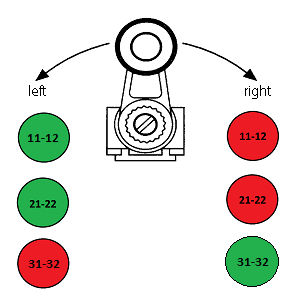
Tell us about your requirement

Price:
Quantity
Select Unit
- 50
- 100
- 200
- 250
- 500
- 1000+
Additional detail
Mobile number
Email

More Products in Limit Switches for Special Applications Category
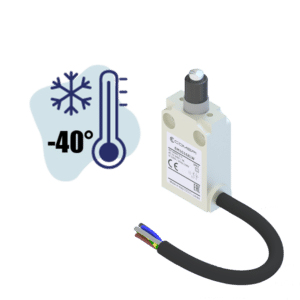
Limit switches for low temperature
Price 1800-2200 INR / Piece
Minimum Order Quantity : 10 Pieces
No Of Poles : 2
Size : Standard Compact
Mechanical Life : Over 10 million operations
Response Time : <50 ms
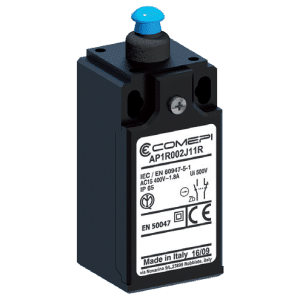
Limit switches for over-speed devices
Price 800-1200 INR / Piece
Minimum Order Quantity : 20 Pieces
No Of Poles : 1
Size : 86 mm x 40 mm x 38 mm
Mechanical Life : 10,000,000 operations
Response Time : 5 ms
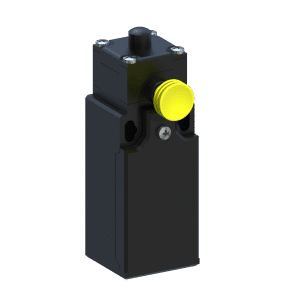
Limit switches for door closing simulation
Price 1000-1500 INR / Piece
Minimum Order Quantity : 10 Pieces
No Of Poles : 1
Size : 72mm x 26mm x 25mm
Mechanical Life : 1,000,000 operations
Response Time : 5ms
Automotive Applications Limit Switches
Price 2000-2500 INR / Piece
Minimum Order Quantity : 10 Pieces
No Of Poles : Single Pole
Size : Standard Compact
Mechanical Life : Over 1,000,000 cycles
Response Time : < 10 ms

Address
ISAC ENTERPRISES
GST : 27AYNPM0695C1Z8
GST : 27AYNPM0695C1Z8
- Unit No.404, Ace Aurum Commercial, Opposite Santosa Resort, Off Mumbai Bangalore Road, Ravet,Pune - 412101, Maharashtra, India
- Phone :07313726879
- Send Inquiry
 Send Inquiry
 Send Inquiry
 Send SMS
 |
ISAC ENTERPRISES
All Rights Reserved.(Terms of Use) Developed and Managed by Infocom Network Private Limited. |
